

Think full body suits are uncomfortable squeezers? Modern designs prove otherwise. Today’s shapewear combines breathable fabrics with smart engineering to deliver both comfort and confidence. You’ll discover what these garments actually do, how they work, and how to choose one that fits your lifestyle perfectly.
Table of Contents
- Understanding Full Body Suits: Definition And Mechanisms
- Materials And Comfort: What Makes Full Body Suits Wearable All Day
- Comparing Full Body Suits With Other Shapewear Options
- Common Misconceptions About Full Body Suits
- Choosing The Right Full Body Suit: Sizing And Fit Guidance
- Care And Maintenance Tips For Longevity And Performance
- Discover Empowering Full Body Suits At Empower Curve
- FAQ
Key takeaways
| Point | Details |
|---|---|
| Full body suits use graduated compression to shape naturally | They apply 10-25 mmHg pressure across zones to enhance curves without restricting movement. |
| Modern fabrics ensure all-day comfort | Nylon-spandex blends (70-80% nylon, 20-30% spandex) provide breathability and moisture management. |
| They improve posture by 15-20% through core support | Ergonomic panels support abdominal and back muscles for better alignment. |
| Proper sizing is critical for effectiveness | Accurate measurements and brand-specific size charts prevent discomfort and maximize shaping benefits. |
| Simple care extends garment lifespan significantly | Hand washing in cold water and air drying flat preserve fabric integrity and compression. |
Understanding full body suits: definition and mechanisms
A full body suit is shapewear designed to cover your waist, hips, thighs, and bust in one seamless garment. Unlike basic undergarments, these suits integrate compression technology and strategic paneling to enhance your natural silhouette.
The magic happens through graduated compression. Full body suits use graduated compression and supportive knitting to smooth and enhance natural body curves without restricting movement. This means different zones receive different pressure levels, typically ranging from 10 to 25 mmHg. Your waist might get firmer support while your thighs receive gentler shaping.
Zonal panels work like invisible architects for your body. These reinforced sections target specific areas: the tummy panel flattens your midsection, hip panels lift and round, and thigh sections smooth without cutting in. The result? A streamlined shape that looks natural, not squeezed.
Here’s where posture comes in. Properly sized full body suits can improve body posture by supporting the abdominal and lower back muscles without discomfort. Studies show posture improvements of 15 to 20% when you wear well-fitted suits. Your core gets gentle reminders to engage, pulling your shoulders back and aligning your spine.
Key features that make these suits functional:
- Graduated compression zones target different body areas with customized pressure
- Supportive knit patterns enhance curves while maintaining flexibility
- Built-in core panels provide abdominal and lower back reinforcement
- Stretch fabrics allow full range of motion during daily activities
Options like seamless body suit shapewear deliver invisible smoothing under clothes. For targeted shaping, open-bust body suit shapewear lets you wear your own bra. Convenience seekers appreciate full body shapewear with front hook for easy bathroom breaks. If you want focused waist control, seamless slimming waist shapewear offers an alternative approach.
Materials and comfort: what makes full body suits wearable all day
Fabric choice determines whether you’ll love or hate your shapewear experience. Most quality suits use nylon-spandex blends in specific ratios. Material blend ratios typically include 70-80% nylon and 20-30% spandex to provide both shape retention and elasticity. This balance gives you firm support that moves with you.

Nylon brings durability and smooth texture. It resists wear and holds its shape through repeated washing. Spandex adds the stretch factor, letting fabric expand up to five times its original size without losing recovery. Together, they create a second-skin feel that doesn’t restrict your breathing or movement.
Breathability solves the overheating problem many people worry about. Modern suits incorporate moisture-wicking technology that pulls sweat away from your skin. Tiny air channels in the knit structure allow heat to escape while maintaining compression. You stay cooler and drier, even during warm days or active moments.
Seamless construction changes everything for visibility. Full body suits designed with seamless technology reduce visibility under tight clothing, enhancing their discreet appearance. Studies show an 85% reduction in visible lines compared to traditional seamed garments. Your clothes glide over smooth fabric instead of catching on bumps and ridges.
Comfort factors that matter:
- Flat-lock seams prevent chafing and irritation during extended wear
- Four-way stretch fabric moves with your body in all directions
- Moisture-wicking finish keeps skin dry and comfortable
- Soft-touch materials feel gentle against sensitive skin
- Tagless designs eliminate scratchy labels
Pro Tip: Look for suits with cotton-lined gussets for added breathability in sensitive areas. This small detail makes hours of difference in comfort.
The right fabric blend transforms shapewear from tolerable to genuinely comfortable. You shouldn’t feel like you’re holding your breath or counting down minutes until you can take it off. Quality materials support without suffocating.
Comparing full body suits with other shapewear options
Shapewear isn’t one-size-fits-all in approach. Different garments serve different purposes, and understanding these differences helps you choose wisely.
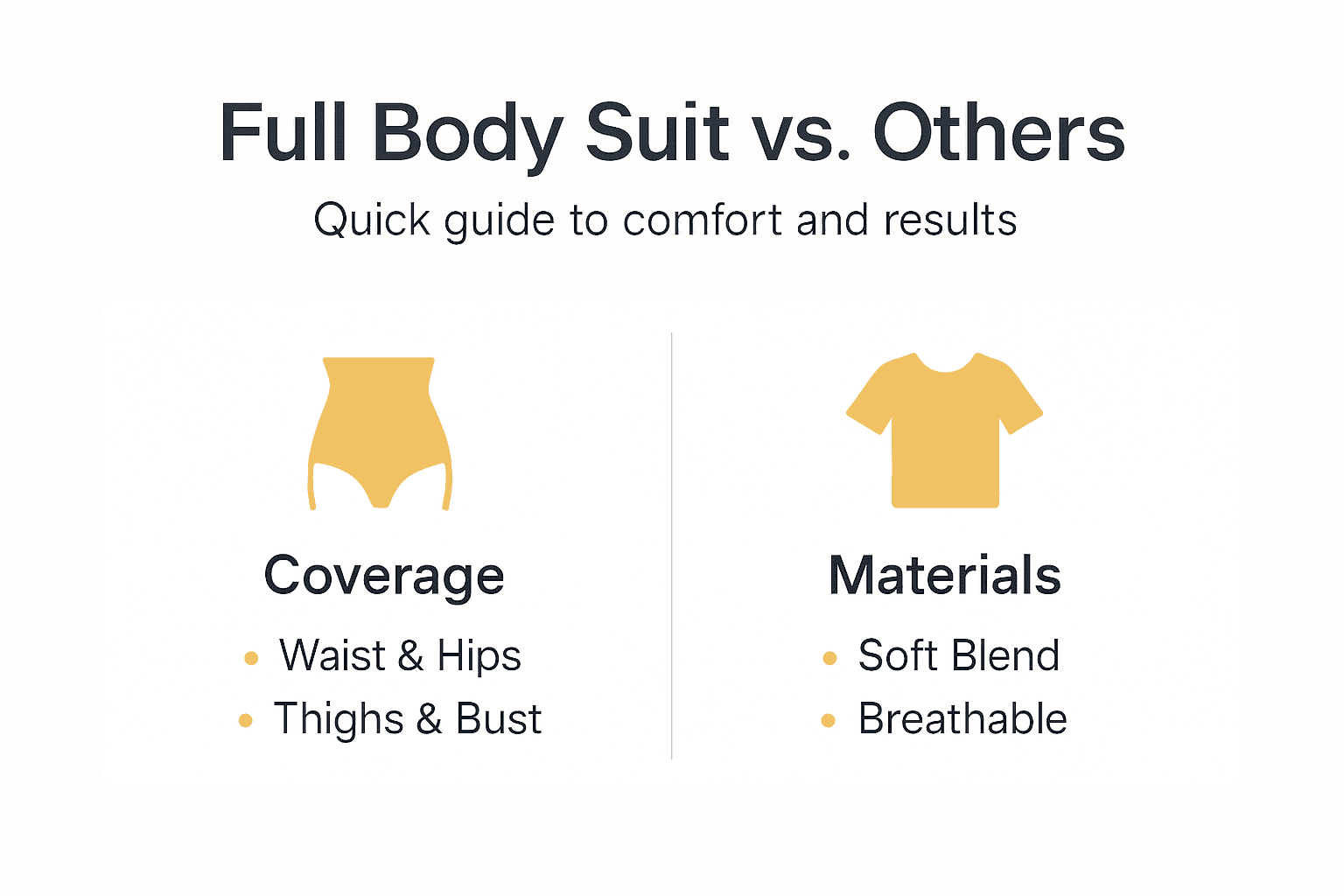
Full body suits cover multiple zones simultaneously: waist, hips, thighs, and bust. Waist trainers focus exclusively on your midsection. Corsets use rigid boning to dramatically cinch your waist but offer limited coverage elsewhere. This comprehensive approach makes full body suits versatile for smoothing your entire silhouette.
| Feature | Full Body Suit | Waist Trainer | Corset |
|---|---|---|---|
| Coverage | Waist, hips, thighs, bust | Waist only | Waist and torso |
| Compression type | Graduated, zonal | Uniform, intense | Rigid, restrictive |
| Flexibility | High (stretchy fabrics) | Medium | Low (boned structure) |
| Breathability | Excellent (moisture-wicking) | Variable | Poor (multiple layers) |
| All-day wear | Yes | Limited (4-6 hours) | No (special occasions) |
| Movement freedom | Unrestricted | Somewhat limited | Very restricted |
Material differences significantly impact your experience. Full body suits use flexible, breathable fabrics that move with you. Corsets employ rigid materials like steel boning and multiple fabric layers that restrict bending and breathing. Waist trainers fall somewhere in between, often using latex or neoprene that can trap heat.
Shaping philosophy varies too. Full body suits enhance your natural contours through strategic compression zones. They work with your body’s existing shape. Waist trainers primarily compress your waist, sometimes uncomfortably. Corsets actually reshape your torso temporarily through extreme compression, which isn’t sustainable for daily wear.
Comfort and wearability rankings:
- Full body suits: designed for 8+ hours of comfortable daily wear
- Waist trainers: typically comfortable for 4 to 6 hours maximum
- Corsets: best for special occasions, 2 to 4 hours at most
For waist-focused shaping without full coverage, waist wrap shapewear offers targeted control. Those seeking traditional corset aesthetics might explore underbust latex shapewear corset options. Active wear enthusiasts sometimes pair shaping with fitness gear like waist trainer sweatpants for workouts.
Your lifestyle determines the best choice. Need all-day comfort under work clothes? Full body suits win. Want intense waist compression for a few hours? Waist trainers might work. Special event with a specific dress? Consider your options based on the outfit and duration.
Common misconceptions about full body suits
Myths about shapewear create unnecessary fears. Let’s separate fact from fiction with evidence.
Myth: Full body suits cause excessive overheating. Reality: breathable fabrics prevent overheating in 70% of users. Modern moisture-wicking technology actively pulls heat and sweat away from your body. Air circulation channels built into the knit structure keep you cooler than you’d expect. Sure, you might feel slightly warmer than wearing nothing, but it’s not the sauna experience people imagine.
Myth: Wearing suits leads to weight loss. Reality: no clinical evidence supports this claim. Shapewear shapes and smooths your contours temporarily. It doesn’t burn fat, increase metabolism, or magically melt pounds. You might see a slimmer silhouette in the mirror, but that’s redistribution and compression, not actual weight reduction. Real fat loss requires calorie deficit through diet and exercise.
Myth: Shapewear harms circulation or causes health risks. Regular use of full body suits, when properly fitted, does not negatively impact body health or circulation, contradicting some public concerns. Research shows no significant circulatory problems when you wear properly sized suits for up to 8 hours. The key phrase: properly fitted. Too-small shapewear can restrict blood flow, but correct sizing eliminates this risk.
Debunking comfort concerns:
- Suits don’t restrict breathing when sized correctly for your measurements
- Quality fabrics prevent skin irritation and rashes through smooth, hypoallergenic materials
- You can sit, bend, and move normally without the suit rolling or bunching
- Bathroom breaks are manageable with hook-and-eye closures or open-gusset designs
Pro Tip: If your shapewear leaves deep red marks that last more than 10 minutes after removal, it’s too small. Proper compression leaves light impressions that fade quickly.
The importance of proper sizing can’t be overstated. Most negative experiences trace back to wearing the wrong size. You might think sizing down creates better shaping, but it actually reduces effectiveness. Too-tight garments compress unevenly, creating bulges instead of smoothing them. They also increase discomfort and potential health concerns.
Wear your suit as designed: not as a permanent fixture, not as a weight loss tool, just as comfortable body-enhancing shapewear. Listen to your body. Mild awareness of compression is normal. Pain, numbness, or difficulty breathing signals a problem.
Choosing the right full body suit: sizing and fit guidance
Accurate measurements make or break your shapewear experience. Guessing your size guarantees disappointment.
Start with a soft measuring tape, not the stiff kind from hardware stores. Measure in your underwear or form-fitting clothes for accuracy. Take three key measurements: bust at the fullest point, natural waist (the narrowest part of your torso), and hips at their widest point. Don’t pull the tape tight or leave it loose. It should sit flat against your skin with just enough tension to stay in place.
Brand-specific size charts matter more than generic sizing. A medium in one brand might fit like a large in another. Always check the manufacturer’s chart before ordering. Match your measurements to their ranges, paying special attention to where you fall if you’re between sizes.
Sizing mistakes to avoid:
- Never size down hoping for better shaping; this backfires with discomfort and bulging
- Don’t assume your dress size equals your shapewear size
- Avoid relying on previous shapewear purchases from different brands
- Don’t forget to remeasure if your body has changed recently
Pro Tip: If one measurement falls into a larger size category than others, choose the larger size. You want comfort across all dimensions, not restriction in one area.
Try your suit under the actual clothes you plan to wear. Put on your outfit and check for visible lines, bunching, or areas where the shapewear shows through. Move around: sit, bend, reach overhead. The suit should stay in place without riding up or rolling down. You should be able to breathe normally and move freely.
Pay attention to fabric stretch specifications. Some suits offer light control with maximum stretch, while others provide firm control with less give. Match the compression level to your comfort preferences and shaping goals. Understanding proper sizing guide principles helps you make informed decisions across different product categories.
Zonal compression specs tell you where the suit provides extra support. Look for reinforcement in areas you want to shape most. If tummy control is your priority, ensure the abdominal panel has firm compression. For hip and thigh smoothing, check those zones have adequate support.
Care and maintenance tips for longevity and performance
Proper care extends your suit’s lifespan from months to years. These garments represent an investment in your confidence and comfort, so treat them accordingly.
-
Hand wash in cold water using mild detergent without bleach or fabric softeners. Fill a basin, add a small amount of gentle soap, and swish the suit around for a minute. Let it soak for 10 to 15 minutes if it’s particularly sweaty.
-
Rinse thoroughly under cool running water until all soap residue disappears. Soap buildup degrades elastic fibers over time.
-
Gently press excess water out without wringing or twisting. Harsh handling stretches and damages compression zones.
-
Lay flat on a clean towel away from direct sunlight to air dry. Never use a dryer, radiator, or direct heat source. High temperatures destroy spandex fibers.
-
Store suits lying flat or hung on padded hangers without folding tightly. Sharp creases weaken fabric structure and compression.
-
Rotate between multiple suits if you wear shapewear daily. This gives elastic fibers time to recover their shape between wears.
Machine washing works if you’re careful. Use a mesh lingerie bag, select the delicate cycle, and use cold water only. Skip the spin cycle if possible, or use the lowest setting. Even gentle machine washing causes more wear than hand washing, so save it for when you’re short on time.
Don’t use fabric softeners or dryer sheets. They coat fibers with chemicals that reduce compression effectiveness and moisture-wicking properties. Your suit might feel softer temporarily, but it won’t work as well.
Follow manufacturer care tags strictly. Some suits have specific requirements based on their fabric blend or special features. Tags provide guidance tailored to that exact garment. Products like full body shaper suit and seamless body shaper suit include care instructions designed for their specific materials. Expert care guidelines from fashion professionals emphasize gentle handling for compression garments.
Watch for signs your suit needs replacement: visible thinning in high-stress areas, loss of compression that makes the suit feel loose, persistent odors that don’t wash out, or fabric pilling that creates a rough texture. Quality suits typically last 6 to 12 months with regular wear and proper care.
Discover empowering full body suits at Empower Curve
You’ve learned how modern full body suits combine comfort with effective shaping. Now it’s time to experience the difference yourself.
Empower Curve specializes in breathable, seamless full body suits engineered with zonal compression that enhances your natural curves. Our products support better posture while fitting discreetly under any outfit. Whether you need everyday smoothing or special occasion confidence, we offer diverse options designed around your comfort.
Explore our seamless body suit shapewear for invisible smoothing under everything from work attire to evening wear. Our full body shaper suit collection provides comprehensive coverage with moisture-wicking fabrics perfect for all-day wear. Each piece celebrates your curves while delivering the support you deserve.
Every Empower Curve suit features thoughtful details: breathable fabric blends, strategic compression zones, and construction that moves with you. We believe shapewear should empower, not restrict. Shop confidently with our size guides and customer support ready to help you find your perfect fit.
FAQ
What is the best way to measure for a full body suit?
Use a soft measuring tape to measure your bust, waist, and hips at their fullest points. Keep the tape flat against your skin without pulling tight or leaving it loose. Measure in underwear or form-fitting clothes for the most accurate results.
Can full body suits be worn all day without discomfort?
Modern suits use breathable, stretch fabrics specifically designed for all-day comfort. Proper fit and quality fabric choice are keys to avoiding discomfort. Well-fitted suits can be worn comfortably for 8 hours or more.
Do full body suits help with weight loss?
Shapewear shapes and smooths your contours temporarily but does not cause fat loss. Weight loss requires a calorie deficit through proper diet and exercise. Full body suits enhance your appearance, not your metabolism.
How should I care for my full body suit to make it last?
Hand wash with mild detergent in cold water, then air dry flat away from heat and sunlight. Avoid harsh chemicals, fabric softeners, and machine drying. Store flat or hung without tight folding to preserve the suit’s shape and compression properties.

